
Best Bike Handlebar Types for Every Riding Style
Choosing the appropriate bike handlebar types is not only about their appearance. but also directly affects your riding posture, handling performance, and comfort etc. Whether you want to cycle through the city. ride on steep and rough mountain roads, or ride on flat roads. It is very important to choose the right handlebars.
Different types of bicycle handlebars match different riding styles. Some handlebars offer a comfortable upright position to enhance the riding experience. Some handlebars offer many grip positions to enhance endurance. Some handlebars offer strong handling to enhance off-road performance. Some handlebars can directly affect your weight step, the pressure on your wrists, and your back. and even your riding posture and aerodynamic performance.
In this guide, I will help you understand and analyze the characteristics of various handlebar types for bikes. So, we on help you quickly find which type of bicycle handlebar suits you. Now, please keep your pace and learn more!

Why Handlebar Types Matter in Cycling?
Because a suitable bicycle handlebar will directly affect your riding experience. But different handlebar types for bikes will directly affect your riding posture, handling, and aerodynamic efficiency. Just like the two types of handlebars, Flat Bars and Cruiser Bars, which can directly enhance your career and comfort, they are very suitable for urban and leisure cycling. In contrast, Drop Bars and Aero Bars are specifically optimized for efficient riding and speed, and are suitable for road racers and triathletes.
But these handlebar types all play different roles and do not meet different needs for cyclists. For mountain bikers, the stability and handling of the handlebars are more important. For travelers, they usually take into account the positions of various grips and ergonomics to ensure they don’t feel tired during long rides. In conclusion, the differences among various bike handlebar types can enable your cycling style and equipment to match. So, the type of handlebars is a very important aspect for cyclists. So, which handlebar is the best? Which brand of handlebars is the best? Next, I will lead you to the main point.
Which Bike Handlebar is best?

There’s no one-size-fits-all answer when it comes to choosing the best bike handlebars. The right handlebar depends entirely on your riding style, comfort preferences, and the terrain you ride on. Whether you’re into road racing, urban commuting, long-distance touring, or mountain biking. Each riding discipline demands a different handlebar type, like drop bars, flat bars, butterfly bars, or aero bars. So, the best handlebar is the one that matches your personal needs and riding goals.
But if you’re asking which brand makes the best bike handlebars, that’s a different conversation—and it still depends on your expectations. That said, there’s one emerging brand that caught my attention this year: Falcarbon Bicycle.
Falcarbon is quickly becoming a beacon for riders who refuse to compromise. They design high-performance carbon fiber components that are built not just for speed, but for spirit. Their mission blends cutting-edge innovation with a raw passion for adventure, and it shows in the details.
From carbon handlebars and saddles to seatposts and stems, Falcarbon focuses on perfect integration and precise fit. Their use of carbon fiber is not just about shaving grams—it’s about delivering exceptional shock absorption. aerodynamic efficiency, and a sleek, performance-driven aesthetic.
Whether you’re a road cyclist looking for lightweight drop bars, a commuter in need of a nimble flat bar. Or a touring rider who values ergonomic comfort, Falcarbon offers a wide range of carbon fiber handlebars tailored to meet your specific demands.
For those of us who believe cycling is more than just movement—it’s a mindset—Falcarbon doesn’t just build parts. They craft purpose.
Different Bike Handlebar Types List
- Flat Bars – These are straight and simple handlebars that offer stable control and are ideal for commuting and mountain biking.
- Drop Bars – Curved handlebars designed for speed and aerodynamics, commonly used in road cycling.
- Riser Bars – Handlebars that rise slightly upward, providing an upright and comfortable riding position.
- Bullhorn Bars – Forward-curving bars that enhance leverage and are popular among urban and single-speed riders.
- Cruiser Bars – Wide, swept-back handlebars that promote a relaxed, upright posture for casual riding.
- Butterfly Bars – Multi-position handlebars for long-distance touring offer varied grip options.
- Aero Bars – Streamlined bars that allow a low, aerodynamic position, perfect for triathlons and time trials.
Below, I will describe to you the specific descriptions, features, functions and other related contents of these several Different Bike Handlebar Types. Please scroll down!
Flat Bars
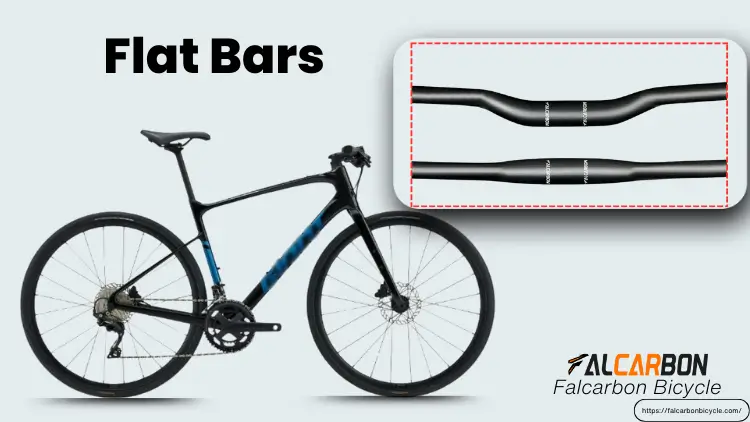
If you are a novice or beginner, then Flat Bars will be your best choice because it is the most widely used and common bike handlebar types. Originating from early mountain biking in California during the late 1970s, flat bars were developed for better off-road control and durability. It can keep you stable and have good control. The width of Flat Bars is generally between 580mm and 760mm, and the weight is also between 250 and 400 grams. The weight specifically depends on the material. The handlebars of this bike are made of aluminum alloy and carbon fiber. These handlebars can help you maintain an upright riding posture and provide stable control for you both on mountains and in the city. Although most handbars are made of aluminium alloy, the currently popular Carbon MTB Handlebars are lightweight, basically weighing less than 200 grams. It can also enhance your shock absorption effect, allowing you to maintain a stable and comfortable off-road experience when riding on rough roads.
Pros and Cons
| Pros | Cons |
|---|---|
| Simple, lightweight, and easy to control | Limited hand positions |
| Ideal for visibility in urban settings | Less aerodynamic for long-distance rides |
| Affordable and easy to maintain | / |
Best For
- Bike types: Mountain bikes, hybrid bikes, city commuters
- Riding style: Urban commuting, off-road trail riding, beginners
Drop Bars

Drop bars are curved handlebars, mainly reflected in the optimization of aerodynamics and speed. It mainly originated from the European road races in the early 20th century. At that time, it was very popular in France and Italy. Competitive bicycles required better aerodynamic postures and windproof handlebars. As the mainstream in handlebar types for bikes, the width range of this handlebar is between 380mm and 460mm. The drop depth is approximately 120-160mm, and the Reach is about 70-100mm. Because the riders pursue aerodynamics and lightweight, the weight of this handlebar is between 200 and 300 grams. Drop bars generally provide many hand positions and usually have a “C” -shaped curved structure. You can place your hand on the straight handlebar (the curved part), the handlebar cover (the top of the brake), or the top of the handlebar (of course, the top!) Up. This type of handlebar helps reduce fatigue during long-distance cycling. This type of Drop bar is the most ideal choice for riders who pursue high efficiency and speed.
Drop bars (carbon fiber road handlebars) are generally chosen by riders made of carbon fiber material, which helps to reduce vibration and weight. providing a lightweight option for long-distance endurance riders.
Pros and Cons
| Pros | Cons |
|---|---|
| Multiple hand positions | Less comfortable for casual riders |
| Highly aerodynamic | Reduced visibility in traffic |
| Efficient power transfer | / |
Best For
- Bike types: Road bikes, endurance bikes, gravel bikes
- Riding style: Long-distance road cycling, racing, touring
Riser Bars

The “Riser Bars” are designed with the center of the bars tilted upwards at a certain Angle, which makes your ride more upright and gives you better control on rough terrain. The Riser Bars originated in the 1990s and evolved from flat bars as mountain biking, especially in North America, became more technical and aggressive. The width range of this type of handlebar is between 680 and 800 mm, the Rise is 10-50mm, the Back Sweep is 5°-12°, and the materials are mainly aluminum alloy and carbon fiber. and the weight is approximately 200-400 grams. They are particularly popular on trail bikes and endurance race bikes, and they are suitable for stable handling and flexible steering turns on technical sections. If you want to make it lighter, carbon fiber Riser Bars are recommended. These bars weigh around 220 grams and significantly improve shock absorption on rocky and rough, steep roads. It is one of the Best bike handlebar types suitable for mountain bikes.
Pros and Cons
| Pros | Cons |
|---|---|
| Enhanced comfort and control | Heavier and less aerodynamic |
| Ideal for technical trails | Limited hand positions |
| Better posture and field of vision | / |
Best For
- Bike types: Trail bikes, enduro bikes, hardtail MTBs
- Riding style: Casual off-roading, downhill riding, leisure MTB
Related Articles: Top 8 Best MTB Grips for All-Terrain Riders
Bullhorn Bars
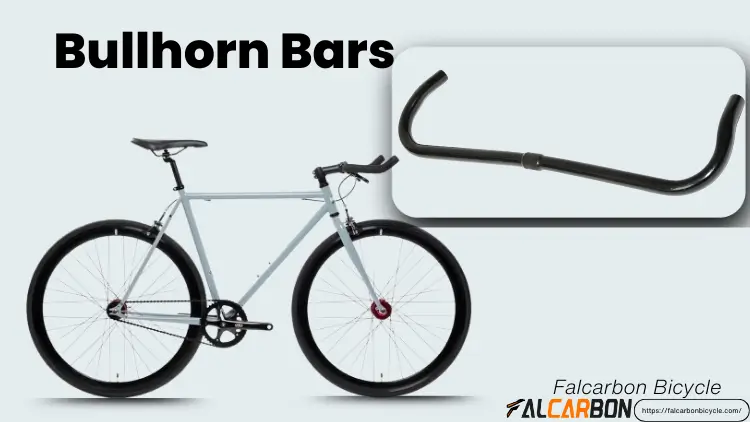
The characteristic of the Bullhorn Bars is that they curve upwards and resemble the horns of a bull. Offering a more aggressive riding posture can help you provide excellent leverage when climbing and sprinting. As a subcategory of bicycle handlebars, they offer good power transmission but offer fewer grip options. This bike handlebar type originated from time trials and track cycling races in the mid-20th century. At that time, racers needed greater leverage to speed up, so it was very popular then. The width of this type of bicycle handlebar is between 380 and 440 millimeters. With a Reach of approximately 80 to 120 millimeters and a weight of about 250 to 350 grams. For urban fixed-gear bikes or track bikes. They are fashionable and practical choices, offering better control and sprinting power.
The weight of carbon fiber Bullhorn Bars is usually no more than 200 grams. which can provide the rigidity for explosive acceleration and reduce the weight of your bicycle at the same time. Although he also has those made of aluminium alloy. But, for acceleration and lightweight options, carbon fiber handlebars are the best choice.
Pros and Cons
| Pros | Cons |
|---|---|
| Good for sprinting and climbing | Limited hand positions |
| Sleek and aerodynamic in city riding | Less comfort on long rides |
| Great control for fast acceleration | / |
Best For
- Bike types: Track bikes, fixies, urban commuters
- Riding style: Fast city commuting, sprinting, time-limited rides
Cruiser Bars

Cruiser bars feature a wide, backward sweep that supports a natural wrist angle and upright sitting position. Common in leisure handlebar types for bikes. This kind of handlebar originated in the United States in the 1930s, when beach cruisers became a popular choice for leisure cycling. This type of handlebar is a common choice for leisure bicycles. Its width ranges from 600mm to 720mm, and its weight is between 400 and 600 grams. The specific weight depends on the material and design you choose. This type of bicycle is most suitable for use on flat terrain as a beach cruiser and a comfort bike.
There are a few handlebars made of carbon fiber for this kind of car.
Pros and Cons
| Pros | Cons |
|---|---|
| Comfortable, upright riding posture | Poor aerodynamics |
| Excellent for slow, scenic rides | Not suitable for rough terrain or speed |
| Stylish and retro look | / |
Best For
- Bike types: Cruiser bikes, city bikes
- Riding style: Relaxed cruising, beach rides, short-distance leisure
Butterfly Bars

The Butterfly Bars (also called trekking bars) surround the bicycles and offer various hand positions. making them particularly suitable for long-distance cycling. This bike handlebar Type originated in Germany and other parts of Europe in the 1980s. and was developed by travel cyclists who needed to achieve ergonomic versatility during multi-day trips. Butterfly Bars usually have a width between 580 and 620mm. The inward or outward bending Angle of the grip area is approximately 30°-50°, and the weight is between 500 and 700 grams. This is usually due to their complex shapes. This kind of handlebar allows cyclists to frequently change the grip. thereby reducing fatigue during long-distance rides.
This kind of handlebar is mainly made of aluminium alloy, and carbon fiber material is not common.
Pros and Cons
| Pros | Cons |
|---|---|
| Multiple comfortable grip positions | Bulkier and heavier |
| Ideal for long tours | Limited off-road performance |
| Reduces wrist and back strain | / |
Best For
- Bike types: Touring bikes, hybrid bikes
- Riding style: Adventure touring, bikepacking, endurance commuting
Aero Bars

Aero Bars aims to maximize the aerodynamic efficiency in time trials and triathlon competitions. They first appeared in professional triathlons and time trials in the late 1980s. especially attracting attention when Greg Lemond won the Tour de France in 1989. These bike handlebar types are generally installed on the handlebars. There are mainly two types: short-range (Clip-On Aero Bars) and long-range (Integrated Aero Bars).
The Aero Bars extend forward by 250 to 400 millimeters, and the weight of the combined device is 300-500 grams or more. They can achieve narrow retractable positions to reduce wind resistance. The difference between it and the other five types of handlebars lies in the position of the handlebars. Moreover, the handlebars are equipped with handrails, which can reduce the pressure on the wrists and hands during cycling. Let you quickly master aerodynamic positioning and quickly grasp comfortable riding balance. It can be said to be a special type of bicycle handlebar stand. It is also one of the types of bicycle handlebars suitable for use on expressways.
But, to seek faster speed and efficiency, it is recommended that you use the Aero Bars made of carbon fiber, which can reduce your weight. The handlebars made of this material are highly favored by triathletes.
Pros and Cons
| Pros | Cons |
|---|---|
| Maximum aerodynamic efficiency | Hard to maneuver in traffic |
| Ideal for solo racing against the clock | Not suited for everyday riding or rough roads |
| Lightweight and performance-focused | / |
Best For
- Bike types: Triathlon bikes, TT bikes, aero road bikes
- Riding style: Time trials, triathlons, competitive racing
If you are a beginner and want to quickly understand how to Measure Bike Handlebar Sizes and measure bike handlebar width. Here we move on to the next content to give you a quick understanding.
Carbon Fiber Bike Handlebars: Are They Worth It?
What is Carbon Fiber?
Carbon fiber is a high-performance material supported by closely woven carbon filaments. It is renowned for its outstanding strength-to-weight ratio, shock absorption performance, and aerodynamic shaping flexibility. In recent years, this carbon fiber material has been adopted by bicycle manufacturers due to its lightweight. And it was made into a combination of total bicycle accessories and components. Such as Carbon fiber bicycle handlebars, Carbon Bike SeatPost, Carbon Bike Stem, and Carbon Bike Saddle.
Why do cyclists choose Carbon Fiber Handlebars?
- For cyclists, its most prominent feature is its lightweight advantage. Compared with aluminum alloy handlebars, it is about 100 to 150 grams lighter. This can bring you a significant improvement when you are climbing and accelerating.
- Secondly, there is the fashionable design of aerodynamics. Carbon fiber can achieve complex and windproof design shapes that other materials cannot. Moreover, the carbon fiber material has a smooth appearance and looks more high-end and exquisite than other materials. Specifically designed to enhance the performance of competitors and time trial participants.
- Compared with traditional aluminum handlebars, carbon fiber handlebars have better shock absorption. can absorb the shock caused by bumpy roads, and can reduce hand fatigue, etc.
The disadvantages of carbon fiber handlebars
- The price of carbon fiber handlebars is more than twice that of aluminum alloy handlebars. The budget for broken jade is limited, and it’s not very friendly to beginners.
- Although carbon fiber has extremely high strength, it is prone to cracking, deformation. and bending under rapid impact and collision.
Who should consider carbon fiber bike handlebars?
- Road riders need carbon fiber handlebars because they expect the material to be lightweight. enhancing speed, efficiency, and comfort
- Racing drivers need carbon fiber handlebars because the carbon fiber material enables them to perform at their best. increase speed and efficiency, and reduce wind resistance.
- Endurance racers need carbon fiber handlebars because choosing carbon fiber material for long-distance cycling can help them reduce vibrations.
Comparison Chart of Handlebar Types for Bikes
| Handlebar Type | Best For | Pros | Cons | Common Materials |
|---|---|---|---|---|
| Flat Bar | Commuting, MTB | Stable, easy control | Limited grip options | Alloy, Carbon Fiber |
| Drop Bar | Road cycling | Aero, multiple grips | Less upright comfort | Alloy, Carbon Fiber |
| Riser Bar | City, MTB | Upright, comfy | Less aerodynamic | Alloy |
| Bullhorn | Urban speed | Power & control | Few hand positions | Alloy |
| Cruiser | Casual rides | Relaxed, stylish | Not performance-based | Alloy |
| Butterfly | Touring | Ergonomic, versatile | Heavy, bulky | Alloy |
| Aero Bar | Time trial, tri | Max aerodynamics | Hard to maneuver | A few hand positions |
Related Articles:
FAQ
Are flat or drop bars better for commuting?
I am an enthusiast who pays more attention to comfort when cycling to and from work. Between flat and drop bars, I prefer Flat Bars because it enables me to ride in a more upright posture, flexibly and conveniently shuttling through crowded roads. In case of emergency, I can change direction easily and freely, etc. Moreover, for a leisure person like me, the stability is relatively good.
What is the difference between flare and outsweep?
The difference between flare and outsweep lies in the direction of the handlebar’s outward angle. Flare refers to the angle at which the drops of the handlebars open outward from the top view — it makes the bars wider at the bottom than at the hoods, offering more wrist clearance and control, especially on rough terrain. Outsweep, on the other hand, is the angle at which the ends of the drops tilt outward from the rider’s body, visible from a front-facing view. While both enhance comfort and control on gravel or adventure bikes, flare affects lateral width, and outsweep changes the angle of your grip.
What is the most comfortable handlebar shape?
Which type of handlebar is the most comfortable? I think it depends on your riding role. If you use it for commuting, Flat Bars and Riser Bars are better because they are stable and upright. If it is a long-distance ride, then Aero Bars and Drop Bars are more suitable. Due to aerodynamic factors, it has good wind control performance and high speed. In conclusion, each type of handlebar has a different function, so you need to find the most comfortable type of handlebar for yourself based on your own riding needs.
What is gravel vs road bike handlebars?
The handlebars of these two types of bicycles are different in design and purpose. Road bike handlebars (Drop Bars) are generally aimed at aerodynamics, speed and flat roads, and are more aggressive riding postures. In contrast, gravel bike handlebars typically have a wider bend sag, a greater camber Angle, and sometimes even an camber Angle, thus providing better control, stability and comfort on uneven terrain. The increased width and Angle of gravel bike handlebars give riders better handling on soft surfaces, making them an ideal choice for adventure or endurance riding, while road bike handlebars rank efficiency and speed on asphalt. These two types of handlebars have obvious differences in design and application, so when choosing them, we should select based on our own needs.
Final Thoughts
Choosing the right handlebars can make a world of difference in your cycling experience. From posture and comfort to handling and performance, the handlebar is a key component that connects you to your bike and the road ahead. With so many bike handlebar types available, it’s worth taking the time to explore different options and see which one truly matches your riding style.
Whether you’re drawn to the aerodynamic precision of drop bars or the relaxed comfort of cruiser bars. Trying out various handlebar types for bikes is the best way to discover what works for you. Don’t hesitate to experiment and compare—your ideal setup might surprise you.
If you’re seeking top-tier performance and cutting-edge design, consider exploring Falcarbon Bicycle. This rising brand pushes the limits of innovation, offering a wide range of carbon fiber handlebars, seatposts. and stems built for riders who demand both speed and precision. With Falcarbon, every ride becomes a refined balance of strength, weight, and control.


