How to Change a Bike Stem: Top Guide
Updating the Bike Stem and upgrading and replacing it is one of the simplest ways to optimize the cycling experience. But whether you are seeking comfortable handling or looking for a ride that better suits your needs. The new Bike Stem can bring about significant changes.
This article will lead you to quickly understand how to change a Bike Stem. And provide detailed installation tutorial guides for beginners. If you’re looking for a premium option, the Falcarbon FS20 Road/MTB Carbon Handlebar Stem from Falcarbon Bicycle offers an excellent balance of strength, lightweight performance. and sleek carbon design—perfect for riders who want both comfort and control in one upgrade. Now, please keep up the pace and quickly understand its steps and process.

Why Change a Bike Stem?
Although the Bike Stem is a relatively small and simple component on a bicycle, it plays a crucial role. The component links the carbon fiber mountain bike handlebars and the front fork steerer tube. There are many benefits to changing the Bike Stem:

1. Adjust the extension range to a comfortable level.
The length of the Bike Stem will directly affect the distance your arm needs to extend. When you have pain in your neck or back, now. You need to use a shorter Bike Stem to reduce and improve your posture, making your posture more upright and relaxed when cycling.
2. Enhance control and response capabilities.
The length of the Bike Stem will directly affect your response speed to the steering input when controlling the Bike. For mountain bikes, a shorter Bike Stem is more stable. The mountain Bike Stem of 40-60mm can help you achieve sensitive steering. While the road Bike Stem of 90-120mm can help you achieve stable cruising.
3. Suitable for your cycling style (aggressive, upright, traveling, etc.).
Your ideal Bike Stem mainly depends on your riding style and location:
- Intense competition → Long handstand, low Angle (negative ascent)
- For casual commuting or travel, a shorter handlebar rise in the positive direction. providing a comfortable upright feeling
- Gravel roads and adventure cycling → Medium-length handlebars for balanced control and comfort
What do you need?
Before starting, please prepare the following tools and materials:
- Allen wrench set (usually 4mm, 5mm, 6mm)
- Torque wrench (used for safely tightening bolts according to specifications)
- Grease or carbon paste (for metal or carbon components)
- New valve stem (make sure it matches the diameter of your steering pipe and handlebar)
- A clean rag
- (Optional) Bicycle repair rack to ensure stability
Step-by-Step: How to Change a Bike Stem
Step 1: Set Up Your Bike
Please place your bicycle on the repair rack or lean it safely against the wall. Please ensure the stability of the bicycle before disassembling or replacing it.
Then you need to mark your current handlebar position with tape so that you can easily and quickly readjust it when replacing the Bike Stem in the future.
Step 2: Remove the Handlebar Faceplate

Use a hex wrench (usually 4 mm or 5 mm) to loosen and remove the four panel bolts. It is recommended to use the method of removing the bolts diagonally. Then, carefully slide the handlebars out and place them on a padded surface or gently hang them up with a rope.
Step 3: Remove the Old Stem
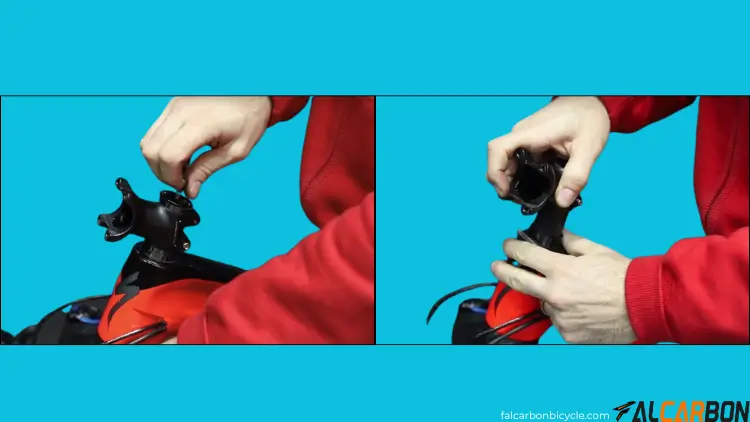
Loosen the two side bolts that clamp the valve stem onto the turning pipe. Loosen the Stem on the rudder pipe, gently slide the valve Stem upwards out of the rudder pipe, and then remove the STEM from the bicycle.
Step 4: Install the New Stem

- Loosen the two handle bolts and slide the new valve stem into the same position on the steering pipe.
- Replace the gasket as it was and reinstall it.
- Gently reinstall the top cover and bolts to adjust the bearing preload (do not over-tighten). It is very important to leave a gap of 2 to 4 millimeters between the top of the rudder pipe and the top of the handle or gasket. Only in this way can the top cover press the handle, the front fork, and the bearing tightly together. ensuring the entire component is firmly and safely fastened.
- Align the rods roughly forward.
Step 5: Reattach the Handlebar

- Put the handlebars into the fixture of the new handlebar stand. Use the marks on the handlebars to match them.
- Reinstall the panel and screw in the bolts by hand.
- Make sure the handlebars and Bike Stem are centered and level.
- Use a torque wrench to tighten the bolts evenly in a cross shape.
Step 6: Align and Final Tightening

Align the Bike Stem with the front wheel to achieve linear steering, and use a torque wrench to tighten the steering bolt of the valve stem. Finally, ensure that the preload of the top cover is tight enough to cut the gap, but not too tight to avoid hindering smooth rotation.
Video: How to Change a Bike Stem
Test Ride & Final Adjustments
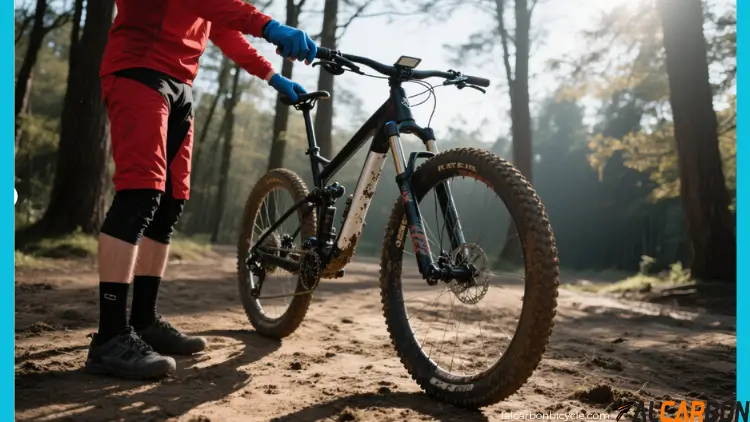
After installing the new Bike Stem and reinstalling the handlebars, you can now take a test drive on the road! But you need to pay attention to the following matters:
- The comfort of cycling: Check if your arms can stretch naturally without any discomfort.
- Control: Try turning and climbing, and check its stability.
- Noise: Listen for any squeaking sounds and check for any loose movement in the headset or stem.
If you feel there are some minor problems again, then please try adjusting the handlebar Angle and the height of the Bike Stem, etc. Adjusting the height of the Bike Stem allows for the addition or removal of spacers at the top and bottom.
Related Articles:
FAQ
How do I know if a new stem fits my bike?
You need to match two main things:
Steerer tube diameter (commonly 1 1/8″)
Handlebar clamp diameter (usually 31.8mm for modern bikes)
Double-check these before purchasing a new stem.
What stem length should I choose?
It depends on your riding style:
Shorter stems (40–70mm): Quick handling, upright position—ideal for MTB and casual riding.
Longer stems (90–130mm): Stable, stretched-out fit—common for road bikes and performance riders.
A professional bike fit can help if you’re unsure.
Is it safe to reuse the old bolts and spacers?
Usually yes, but check for wear, rust, or damage. If you’re installing a carbon stem or handlebar, consider replacing bolts and using carbon assembly paste for extra safety.
Can you replace a bike stem?
Yes. This is a simple process. You just need to select some tools, and it can operate normally. Just as the steps described above. First, remove the front cover of the handlebar stand, take off the handlebars, and place them properly. Then, loosen the fixing screws between the handlebar stand and the riser, remove the old handlebar stand and replace it with a new one. After adjusting the Angle and height, fix the screws in sequence. Finally, reinstall the handlebars and tighten the screws of the front cover. If it is a carbon fiber part, it is recommended to use a torque wrench and carbon fiber installation paste to ensure safety and performance. Changing the handlebars can effectively adjust the riding posture and control feel.
How to take a bike stem off?
To determine whether your bike stem is suitable for your bicycle, you need to confirm that the diameter of its riser matches the frame. and that the size of the cross-tube clip of the handlebar is consistent with the handlebar.
Are bike stems universal?
As described earlier in the article, bicycle stems come in different sizes and dimensions because they are designed to suit various bicycle geomeuses, handlebar diameters, and fork steering tube sizes. All when making a choice, you need to select and adjust the Bike Stem that suits you according to your own model and the posture given by your children.
Conclusion
“How to Change a Bike Stem” is a simple yet significant thing for cyclists. Changing a Bike Stem can completely transform your riding experience. Whether you want a better riding experience or handling performance. Replacing the appropriate Bike Stem is friendly and beneficial for beginners. Hope the guide will be helpful to you.