How to Measure Bike Handlebar Width
When it comes to the comfort and performance of bicycles. Few components are as crucial as the width of the bike handlebars, but they are often overlooked. Whether you are cycling efficiently on a flat road or a steep and bumpy mountain road. The appropriate width of the bicycle handlebars will directly affect your handling and stability during cycling. But what is bike handlebar width? How to measure the width of the bike handlebars? Through this article, I will lead you to quickly understand many relevant information about the width of the bike handlebar. And related contents, such as the differences in width between mountain bike handlebar width and road bike handlebar width. and how to measure them quickly. Please dive with me!
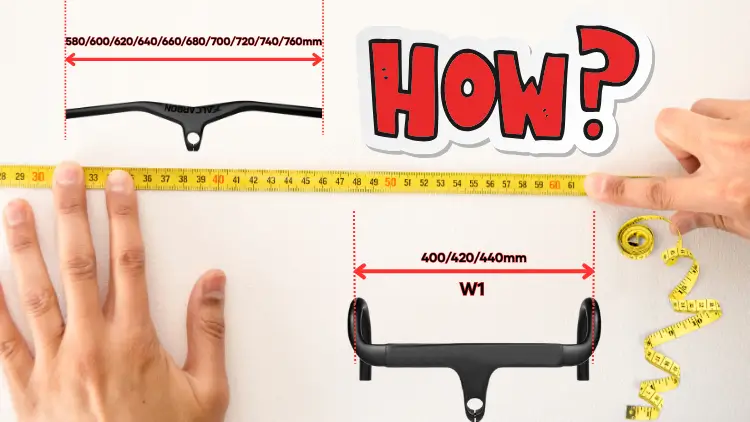
What is Bike Handlebar Width?
Bike handlebar width mainly refers to the straight-line distance between two sections of the carbon fiber bicycle handlebars. The main measure is the distance from the outermost end of one side of the handlebar or the center of the holding area to the corresponding position on the other side. The width of this distance mainly determines the range of motion of your hands when riding. It also directly affects your handling performance and other related factors. The width of a bicycle handlebar is generally measured in centimeters or millimeters.
Related Articles: How to Measure Bike Handlebar Sizes Correctly.
The width differences of different types of bikes
First of all, different types of bicycles have different design requirements for handlebar width:
- Road Bikes: The handlebar width of road Bikes is relatively narrow. Generally, the handlebar width of this type of vehicle is between 380mm and 460mm. The narrower handlebars will reduce wind resistance and improve efficiency when you are riding. making it suitable for long-distance and group rides.
- Mountain Bikes: The handlebar width of mountain Bikes is generally wide, usually ranging from 700mm to 800mm, or even wider. The wider handlebars allow you to ride freely and easily on bumpy mountain roads and perform even better on off-road sections.
- City bikes, Gravel bikes, and station bikes: The handlebar widths of these types of bikes are generally between those of road and mountain bike handlebars. accommodating both vigorous and comfortable performance.
Related Articles: Best Bike Handlebar Types for Every Riding Style.
Why Handlebar Width Matters?
The width of the Bike handlebar is only a reference size for us, but at the same time, it also plays a crucial role. A suitable bike handlebar width can not only enable you to better improve the handling performance. stability and comfort during the riding process. It can be described from the following points:
Handling and stability: Wider handlebars offer better leverage, making it suitable for rapid direction changes on rough roads and flexible control.
Stability and comfort: The wide handlebars increase the support surface for the upper body during riding. which helps maintain balance and offers certain advantages when standing and climbing slopes. But an appropriate width reduces tension in the shoulders and wrists.
Aerodynamics: Narrower rods improve airflow, which is beneficial for road bikes.
Different cycling styles: Different events (cross-country races, downhill, racing, touring) need different bicycle handlebars of different widths. At the same time, it is also closely combined with the body differences of cyclists. Riders with wider shoulders may need to choose a wider type of handlebar. Riders who are tall, thin, and narrow may encounter various problems, such as muscle strains and fatigue. especially during the ride if they choose wider handlebars.
How to Measure Bike Handlebar Width (Step-by-Step)
About the measurement method of Bike handlebar width, I will take road bikes and mountain bikes as examples below. There are two ways to measure the width of a bicycle handlebar, namely:
- Center-to-center: From the Center of one end of the grip position to the center of the other end. This standard is mostly adopted by road vehicles.
- End-to-end: From the outside of one End of the handlebar to the outside of the other end. This method is commonly adopted by mountain bikes.
Prepare the tools
- A tape measure or a straight ruler (a flexible ruler or a woodworking tape measure is recommended)
- Horizontal ground or workbench
Step 1: Measure Road Bike Handlebar Width.

- First of all, we place the handlebars of the road bike on a horizontal platform.
- 2. Then find the most natural position to hold the handlebar at the lower bend, which is usually the lower bend or the brake lever position.
- 3. Then, use a tape measure to measure from the center of the left grip to the center of the right grip. Use the center-to-center measurement method.
- 4. Finally, record your measurement data. Generally, the number “Measure Road Bike Handlebar Width” is 420mm, which means the width is 42cm.
Tips for Falcarbon Bicycle:
When choosing the Width of the Road Bike Handlebar, you can take the rider’s shoulder width as the reference point. The shoulder width ≈ is the width of the handlebar.
Step 2: Measure Mountain Bike Handlebar Width.

- First of all, we need to remove the handlebar covers or bicycle accessories, and other related items on the mountain bike. Then place the handlebars on the horizontal countertop.
- Use a tape measure to measure from the outer end of the left handlebar to the outer end of the right handlebar (end-to-end).
- Then record the actual measured size of the Handlebar Width of the Mountain Bike. Generally, the value is between 580mm and 800mm.
Mountain Bike Handlebar Width
In mountain biking, the width of the handlebars is not a detail issue but a key factor affecting handling performance and riding stability. A handlebar that is too narrow is difficult to handle on rough roads and will also limit its lever effect and steering accuracy. thereby affecting the riding experience. But, overly wide carbon fiber mountain bike handlebars can cause oversteering in technical terrains and reduce maneuverability. It will also put pressure on the shoulders and arms.
Meanwhile, the advantage of mountain bike handlebars is that you can easily shorten and cut them. Choosing an appropriate mountain bike handlebar width can provide a better sense of control and confidence in complex terrains.
Common width ranges of mountain bikes:
The following width ranges seem to be recommended based on your cycling style for your reference only:
| Riding Style | Recommended Width Range |
|---|---|
| Recreational XC | 700–740mm |
| All-Mountain / Trail | 740–780mm |
| Enduro / Downhill | 760–800 mm+ |
How to choose the appropriate mountain bike handlebar width based on height, shoulder width, and cycling style?
It’s very simple. First, choose the appropriate handlebar width of the mountain bike. The main thing is to find the balance point between its controllability and comfort. Below, I will consider height, shoulder width, and cycling style. Here are some of my suggestions:
According to height and shoulder width
- Shoulder width < 40cm: It is recommended to start from 700-720mm
- Shoulder width 40-45cm: 740-760mm is recommended
- Shoulder width > 45cm: 780mm or more can be considered
According to the cycling style:
- XC: 700-740mm, reducing arm resistance.
- Trail/All-Mountain: 740-760mm, balanced handling and comfort.
- Enduro/DH: 780- 800 mm+, emphasizing stability and control.
Road Bike Handlebar Width
In road cycling, the width of the handlebars not only affects comfort. But it is also related to cycling efficiency, aerodynamic performance, and handling. Too narrow handlebars, due to the limited space for arm movement, will cause pain for cyclists and also affect their ability to go downhill or turn. But, overly wide handlebars can hurt aerodynamic performance and riding efficiency. and increase wind resistance, resulting in various factors such as slower speed. So, for the best comfort, the position of your arm should be as relaxed as possible. This means that your arm needs to be stretched straight forward. At this point, the width of the handlebars should be the same as your shoulders. This might be a relatively appropriate width position. So, choosing the appropriate width can significantly enhance performance during long-distance cycling or racing.
Common width ranges of Road bikes:
| Rider Type | Typical Handlebar Width |
|---|---|
| Small/Narrow-shouldered Riders | 380–400mm |
| Average-shouldered Riders | 400–420mm |
| Broad-shouldered / Tall Riders | 440–460mm |
Tips for Choosing the Right Handlebar Width
Finding the right bike handlebar width for yourself is not just a simple matter of looking at the data. It also depends on your height, body type, and riding preferences etc. The appropriate bike handlebar width can enhance your comfort, control, and endurance, etc. We need to quickly understand it from the following points:
1. Real test drive.
Then you can go to a bicycle specialty store in person to try out the widths of different handlebars. Through trial rides, observations, and experiences, you can choose the handlebars that suit you. The most important thing is that during the test ride, you should observe whether your arms, shoulders, and back are comfortable. The taller you are, the wider your barbell needs to be.
2. Consider the geometry of the bicycle and the type of riding.
The width of the bicycle handlebars and the combination shape of the bicycle frame are in harmony with your riding posture.
If you want to achieve a better aerodynamic position. Then, an aggressive geometry and a narrower handlebar width would be more suitable for you.
If you are a person who values endurance and off-road cycling, then comfort and stability are very important. Now, you need to choose a wider handlebar.
3. Understand the impact on muscle fatigue and breathing.
The width of the bike handlebars not only affects your rapid turning during cycling. But also influences the way your upper body is supported during cycling. So we need to choose a natural way of cycling to relieve stress to the greatest extent. and make a suitable width choice that allows us to breathe smoothly during the cycling process. The following table content will describe the way the handlebar width supports your ascent.
| Handlebar Width | Effect on Body |
|---|---|
| Too Narrow | May restrict breathing and compress chest space; leads to shoulder tension. |
| Too Wide | Can overextend the arms and shoulders, causing fatigue in deltoids and traps. |
| Just Right | Can overextend the arms and shoulders, causing fatigue in the deltoids and traps. |
Related Articles:
- How to Measure Bike Stem Length
- How to remove bike handlebar grips
- Top 8 Best MTB Grips for All-Terrain Riders
- How to Measure MTB Saddle Size
FAQ
What happens if my Handlebars are too wide or too narrow?
If your handlebars are too wide, it may overstretch your arms and shoulders, leading to muscle fatigue. Especially the upper back, neck, and triceps. So, overly narrow handlebars will restrict the movement of your chest, limit your breathing, and put pressure on your hands and wrists. So it is very important for us to choose the bike handlebar width that suits us. Choosing the right width of the bike model and riding it can also help with weight loss and physical exercise.
Can I cut my handlebars to adjust the width?
Yes. If the width of your mountain bike handlebars is not suitable, you can choose to cut them to adjust to the best fit that suits you. Please follow the manufacturer’s guidelines and select dedicated tools for cutting. It is not recommended to cut the handlebars of road bicycles, as this will weaken their safety performance.
Are road and MTB handlebars interchangeable?
Due to differences in shape, size, and purpose, the handlebars of road bikes and mountain bikes are usually not interchangeable.
Although the handlebars of road bikes and mountain bikes may be the same in some specifications (such as the diameter of the clips). Due to differences in shape, control methods, and riding postures. They are usually not directly interchangeable. Because the handlebars of road bikes are mostly downward-curved. They focus on aerodynamics and long-distance comfort. The handlebars of mountain bikes tend to be straight or upward, emphasizing handling and stability. If replacement is needed, it is often necessary to replace the brake handle, the transmission system, and even readjust the sitting posture and cable configuration simultaneously. So, the two have significant differences in structure and application and do not fall into a “plug and play” interchangeable relationship.
What are the common handlebar widths?
The common width of bicycle handlebars usually varies depending on the type of your bicycle. Generally, the width range of the handlebars of a road bike is around 380mm to 460mm. The width range of the handlebars of the mountain bike is approximately 700mm to 800mm.
How do I know if my handlebars are too wide?
1. Your shoulders or back may feel tired after cycling.
2. The elbow feels locked or unable to maintain a natural bend
3. The narrower handlebars have a narrow space and are difficult to handle.
4. On technical uphill sections, the bicycle feels unstable and difficult to control.
Conclusion
In conclusion, choosing an appropriate bike handlebar width is not merely a numerical issue we focus on. It concerns how you feel when holding it in your hand, the movement of your body during each turn, and your comfort level after cycling for one mile. No matter which type of bike you choose to ride. Selecting the right width of the handlebars can help you achieve high riding efficiency and stability. Through the measurement methods described in the above article, we believe you have gained an understanding. So now, take some time to adjust your Settings below!